
Aegisify Audit SaaS Adds a WordPress Security Suite License for Every Registered Domain
Running a serious WordPress website often means managing too many disconnected tools. One plugin monitors security events. Another handles backups. Another filters spam. Another manages sitemaps. Additional tools may be needed for links, SEO improvements, application-layer protection, and critical-file review.
The problem is not simply the number of plugins. The bigger challenge is turning scattered technical signals into clear priorities and practical action.
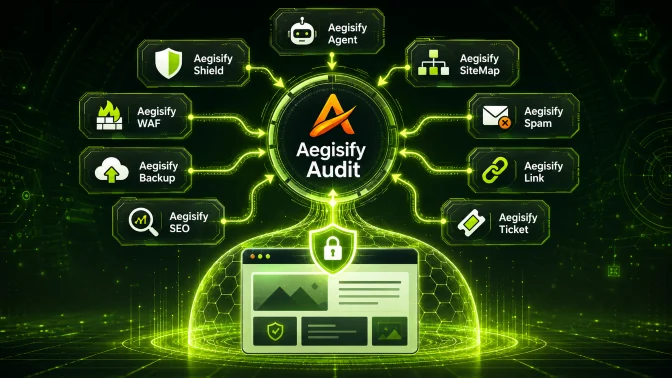
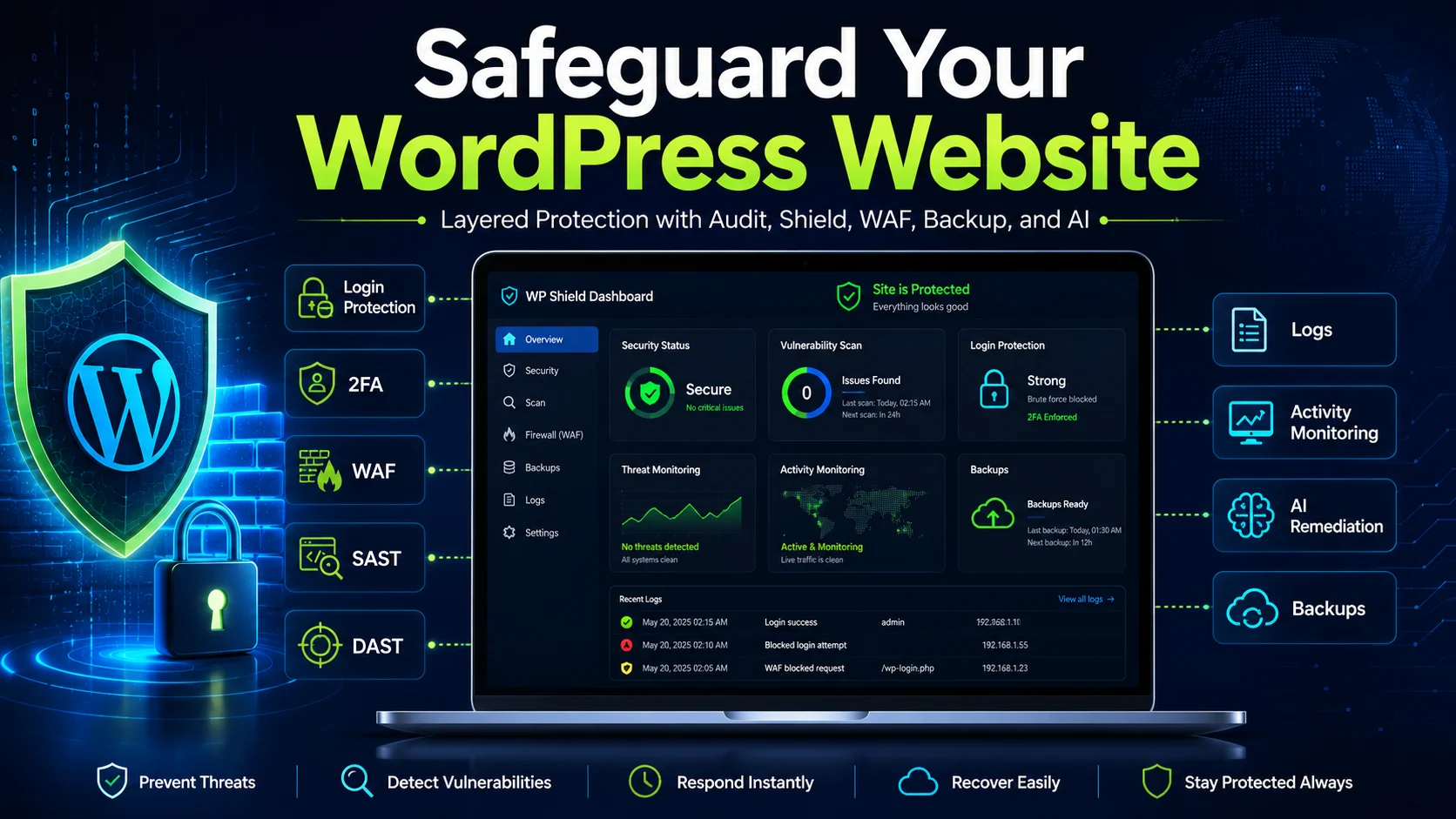
Aegisify is simplifying that workflow by bringing its connected WordPress product suite into the Aegisify Audit SaaS subscription model. Every domain registered and licensed in Aegisify Audit will receive one license for the connected Aegisify WordPress product suite.
One Registered Domain. One Connected Aegisify Product-Suite License.
Aegisify Audit is designed as a WordPress security-audit and site-intelligence platform. It connects SaaS-level visibility with WordPress-side evidence and controls through the Aegisify Agent and the Aegisify product suite.
Instead of treating security, SEO, backups, spam protection, sitemaps, links, and operational workflows as isolated tasks, the Aegisify model brings them into a more connected experience.
The goal is straightforward: help WordPress site owners, agencies, ecommerce operators, and organizations running mission-critical websites see what matters, prioritize risk, take practical action, and monitor the result.
Why the Aegisify Audit SaaS and Agent Model Matters
External website scans provide valuable visibility, but they do not always show the full picture inside a WordPress installation. A deeper review may require site-level evidence about WordPress configuration, dependencies, code, logs, plugins, themes, and file changes.
Aegisify Audit combines verified-domain scanning with the Aegisify Agent. After a domain is registered and verified, the Agent can be installed inside WordPress to support deeper site review and structured evidence collection.
This creates a more useful operating model:
- Use Aegisify Audit SaaS to organize registered domains, findings, security evidence, and remediation priorities.
- Use the Aegisify Agent for deeper WordPress-side visibility where local access is required.
- Use the connected Aegisify WordPress product suite to strengthen, monitor, and improve each licensed domain.
WordPress Critical Files Deserve Priority Attention
WordPress websites depend on a small set of files and loading surfaces that can have an outsized impact on site behavior. Unexpected changes do not automatically mean a website has been compromised, but they deserve careful review.
That is why WordPress critical files monitoring should be a priority for serious site owners.
Important monitoring targets may include:
- wp-config.php monitoring for unexpected changes to a sensitive WordPress configuration file.
- .htaccess monitoring and web-server configuration review.
- WordPress core file integrity review for files such as wp-login.php, wp-settings.php, wp-load.php, wp-blog-header.php, xmlrpc.php, and wp-cron.php.
- MU plugins and auto-loaded WordPress surfaces that can affect site behavior.
- Writable directories, including upload, cache, backup, and temporary locations where unexpected executable files may appear.
- WordPress core checksum verification and review of unexpected checksum mismatches.
A stronger WordPress file integrity monitoring workflow should make it easier to identify unexpected WordPress file changes, review baseline snapshots, compare file hashes, inspect missing or newly added files, and use file diff review before deciding whether a change is authorized or suspicious.
Related Articles
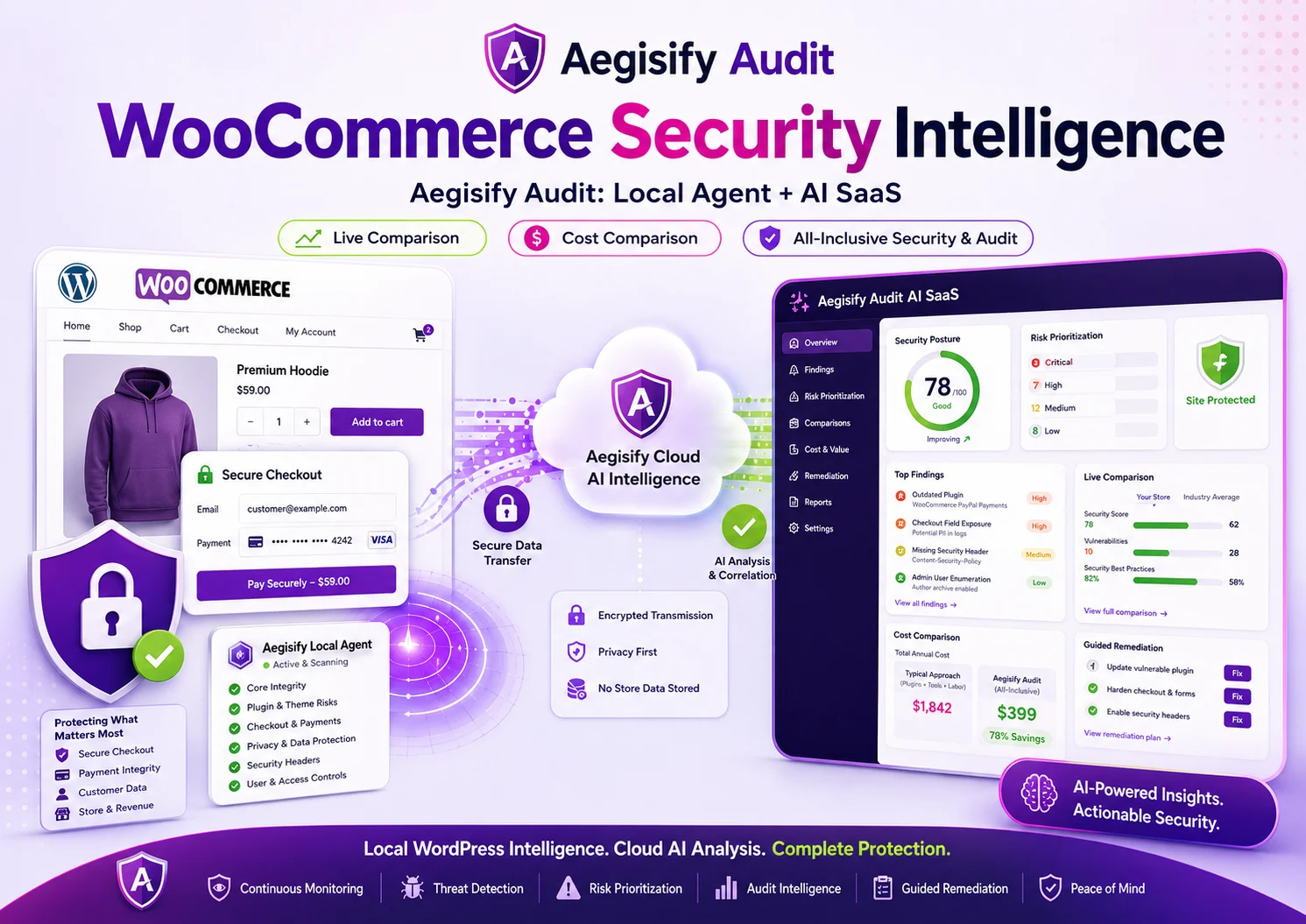
WooCommerce Security Audit Intelligence: Local WordPress Evidence, AI SaaS [...]
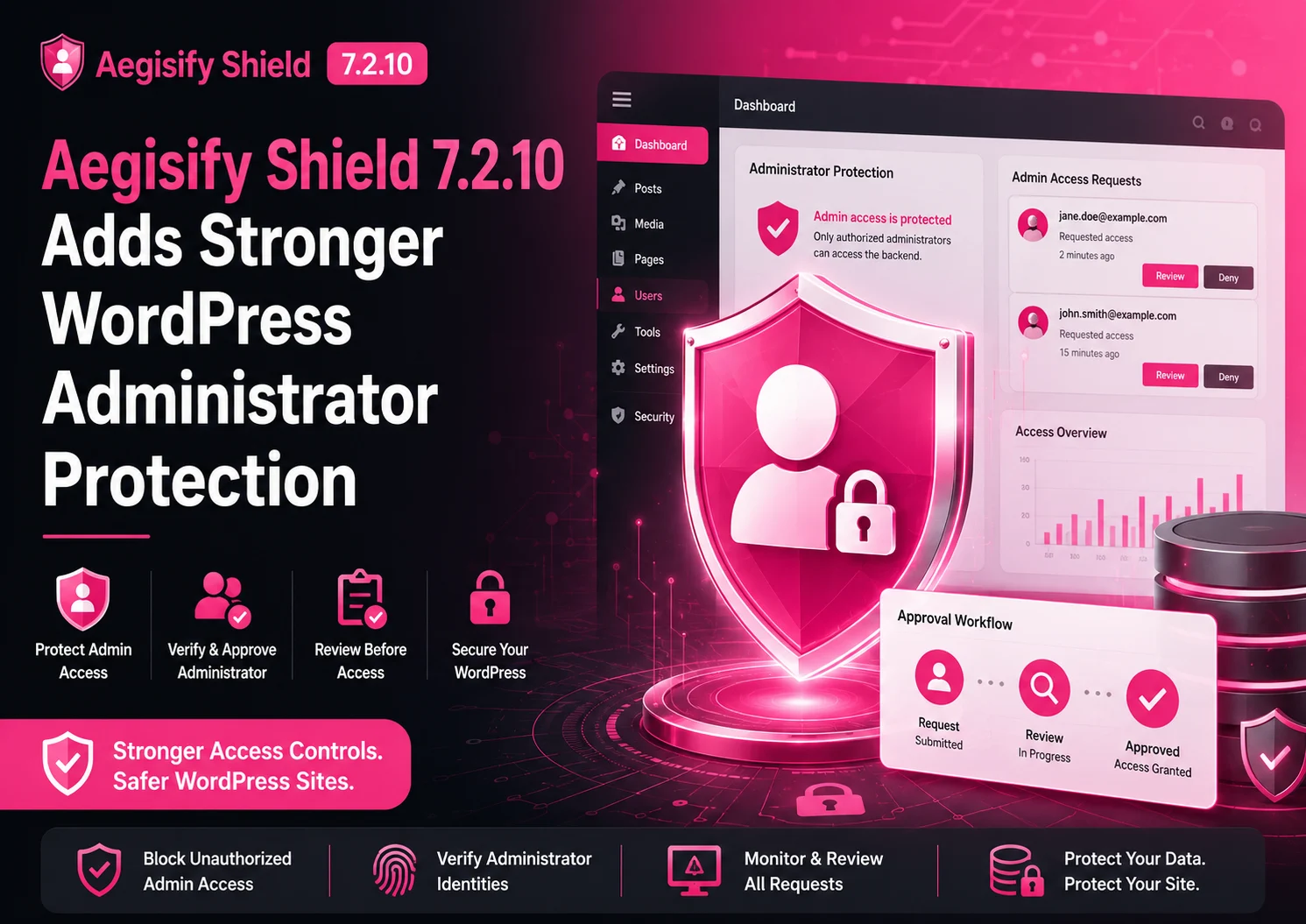
Aegisify Shield 7.2.10 Adds Stronger Protection Against Unauthorized WordPress Administrators [...]
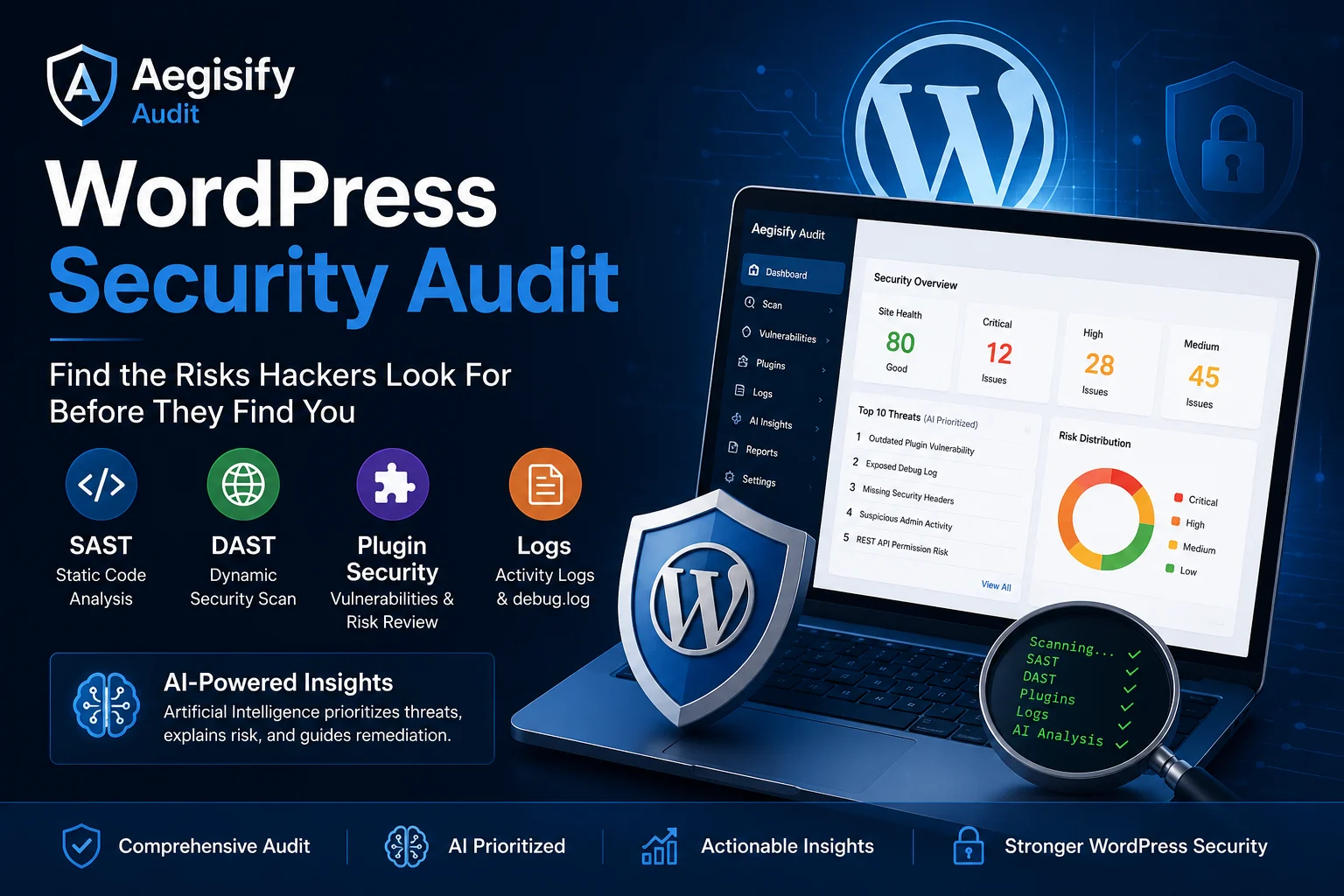
WordPress Security Audit: Find the Risks Hackers Look For [...]
Aegisify Audit SaaS Adds a WordPress Security Suite License for [...]
How to Safeguard a WordPress Website: A Layered Security Guide [...]
